
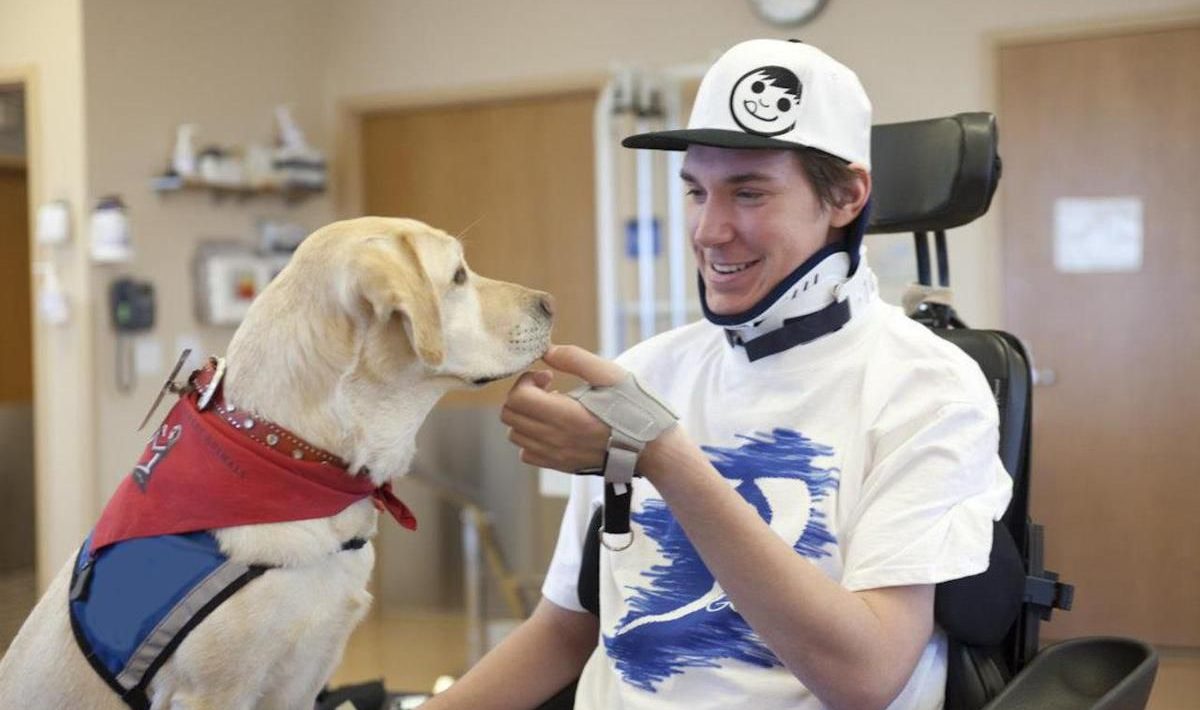
What makes a good therapy dog, and what makes a good therapy dog for PTSD?
That question may be worth asking if you’re considering a therapy dog for yourself, hoping to train your own dog for the role, or even are looking for the right fit of dog to join your family.
Therapy Dogs for PTSD and Other Conditions
Animal-assisted therapy and interventions have grown in popularity in recent years. Therapy dogs are deployed to serve in many different settings, such as hospitals, schools, libraries, and public safety departments.
Roughly 500,000 of these dogs serve individuals with disabilities like post-traumatic stress disorder (PTSD). The condition can occur as a response to experiencing or witnessing a traumatic event and is characterized by symptoms like extreme anxiety, hypervigilance, nightmares, and flashbacks. Typically, a service dog for PTSD will be trained to recognize and intervene at these signs of distress.
What to Look for in a Therapy Dog for PTSD
A good therapy dog for PTSD will have many of the same qualities that distinguish good therapy dogs for other conditions. An A+ temperament is one example, but what does that look like? Here are some of the more important traits that together add up to a good temperament.
Friendliness – The dog must enjoy interacting with people and taking an interest in them. This may include taking the initiative to go up to people of its own accord. A friendly dog will also be attentive to its handler and eager to please.
Calmness – The dog should not get spooked easily, whether that is in new environments with unfamiliar people or in response to loud noises and other such interruptions. An article in Bustle put it well when it said good therapy dogs are “able to ignore stimuli.”
Comfortability with human touch – The dog must enjoy being pet. Not all dogs do, and some have sensitive spots—pet them in the wrong place and they growl or bare their teeth. A good therapy dog for PTSD will gravitate to kind human hands.
Other Unique Attributes of Therapy Dogs for PTSD
A study in 2020 in the journal Frontiers shed some light on this question. When it studied psychiatric service dogs that were assisting veterans with PTSD, it found certain trained behaviors were especially helpful at relieving PTSD symptoms, improving quality of life, and assisting social function. Some examples of these trained behaviors included:
- Interrupting anxiety with a nose bump, head in its owner’s lap, or another sign
- Calming anxiety by lying on top of its handler, gently leaning against its handler’s body, or resting its head in its handler’s lap
- Assisting in public with social greetings, by offering a paw
- Gently waking up its handler when the handler is having a nightmare
- Positioning itself behind its handler to watch its handler’s back
A dog that can learn and consistently execute these behaviors must be intelligent, patient, and devoted to its handler, in addition to having an A+ temperament. Such dogs may take time to train, but it’s hard to think of a better companion with whom to face PTSD.