
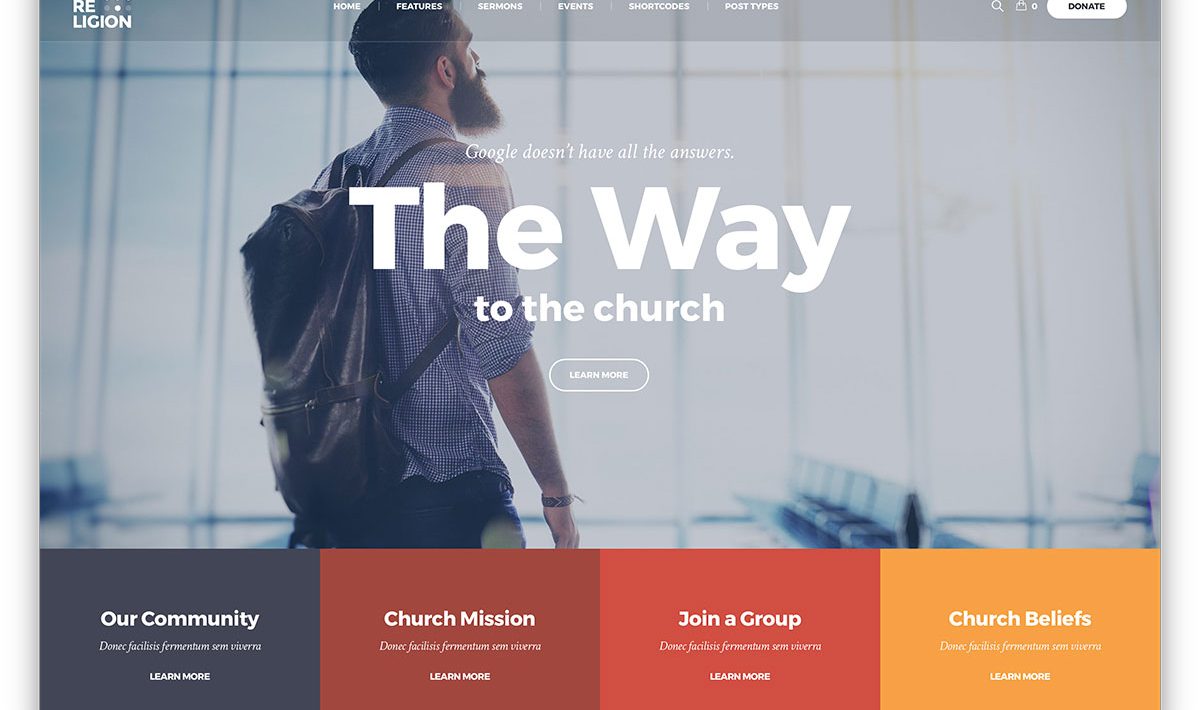
Creating an effective church website is essential for engaging with your congregation and reaching out to potential new members. Your website serves as the digital front door to your church, providing important information and a sense of community for both current and prospective members. As a web hosting company, we’ve seen many church websites succeed and some fall short. Our experience has shown us what works and what doesn’t. Here’s a guide on what to include on your church website and what to avoid to ensure it serves your community well.
Table of Contents
Essential Elements for a Church Website
Clear Mission and Vision
Your church’s mission and vision should be prominently displayed on the homepage. This helps visitors understand your church’s purpose and core values.
- Mission Statement: A concise statement that clearly defines your church’s mission.
- Vision Statement: An inspiring vision of the future your church is working towards.
Service Times and Locations
Make it easy for visitors to find when and where they can join your services. This information should be easily accessible on the homepage and other relevant pages.
- Service Times: List all regular service times, including any special services.
- Location Details: Provide the address, directions, and a map to your church.
Contact Information
Ensure your contact information is easy to find. This includes:
- Phone Number: A direct number where inquiries can be made.
- Email Address: A general email address for questions or further information.
- Contact Form: A simple form for visitors to reach out with specific questions or requests.
About Us Page
An “About Us” page is crucial for new visitors. It should include:
- Church History: A brief history of your church.
- Leadership Team: Photos and bios of your church leaders and staff.
- Core Beliefs: An overview of your church’s core beliefs and doctrine.
Ministries and Programs
Detail the various ministries and programs your church offers. This helps visitors find opportunities to get involved.
- Children’s Ministry: Information on programs for children and how to get involved.
- Youth Ministry: Activities and events for teens and young adults.
- Adult Programs: Bible studies, prayer groups, and other adult ministries.
Event Calendar
An up-to-date event calendar is essential. It should include:
- Upcoming Events: Dates, times, and details of upcoming church events.
- Regular Activities: Information on regular meetings and activities.
Sermon Archive
Providing access to past sermons can be a great resource for your congregation and visitors.
- Audio/Video Recordings: Upload recordings of past sermons.
- Transcripts: Written transcripts for those who prefer reading.
Online Giving
Include a secure online giving option. This makes it easy for members to support the church financially.
- Donation Options: Various ways to give (credit card, bank transfer, etc.).
- Recurring Donations: Options for setting up recurring donations.
Elements to Avoid on a Church Website
Overly Complex Navigation
Keep the navigation simple and intuitive. Visitors should be able to find information quickly without having to click through multiple pages.
- Confusing Menu Structure: Use clear and concise labels for menu items.
- Avoid Excessive Submenus: Too many submenu items can be overwhelming.
Outdated Information
Ensure all information is current. Outdated content can be frustrating and misleading for visitors.
- Outdated Content: Schedule regular updates to keep content fresh.
- Old events: Remove or archive past events promptly.
Auto-Playing Media
Auto-playing videos or music can be disruptive and off-putting to visitors.
- Manual Play: Allow users to choose when to play media.
- Loud Volume: Ensure users can easily control the volume.
Excessive Flash and Animation
While a visually appealing site is important, too much flash and animation can be distracting.
- Too much content Design: Focus on a clean and simple design.
- Flashy Animations: Use animations sparingly to enhance, not overwhelm, the user experience.
Heavy Use of Jargon
Avoid using too much religious jargon that might be confusing to new visitors.
- Confusing Language: Use simple and clear language to describe your church and its activities.
- Uninformative to your audience: If specific terms are necessary, consider including a glossary.
Intrusive Pop-Ups
While pop-ups can be useful for important announcements, they should not be intrusive.
- Numerous Pop-Ups: Use pop-ups sparingly and ensure they are easy to close.
- Unnecessary Information: Only use pop-ups for important, time-sensitive information.
Conclusion
Creating an effective church website involves a balance of providing essential information while avoiding elements that can detract from the user experience. By focusing on clear communication, up-to-date content, and a user-friendly design, your church website can become a valuable tool for connecting with your congregation and welcoming new members.
As one church member noted, “A well-designed church website makes me feel more connected to my community, even when I can’t be there in person.” Keep this sentiment in mind as you build and maintain your church website, ensuring it serves as a welcoming and informative portal for all who visit and engage online.